Guide
How to make a hematite stretch bracelet
A stretch bracelet is one of the easiest pieces of jewelry to make at home: beads, elastic cord and one good knot. Magnetized hematite adds one twist: the beads want to jump together while you work.
What you need
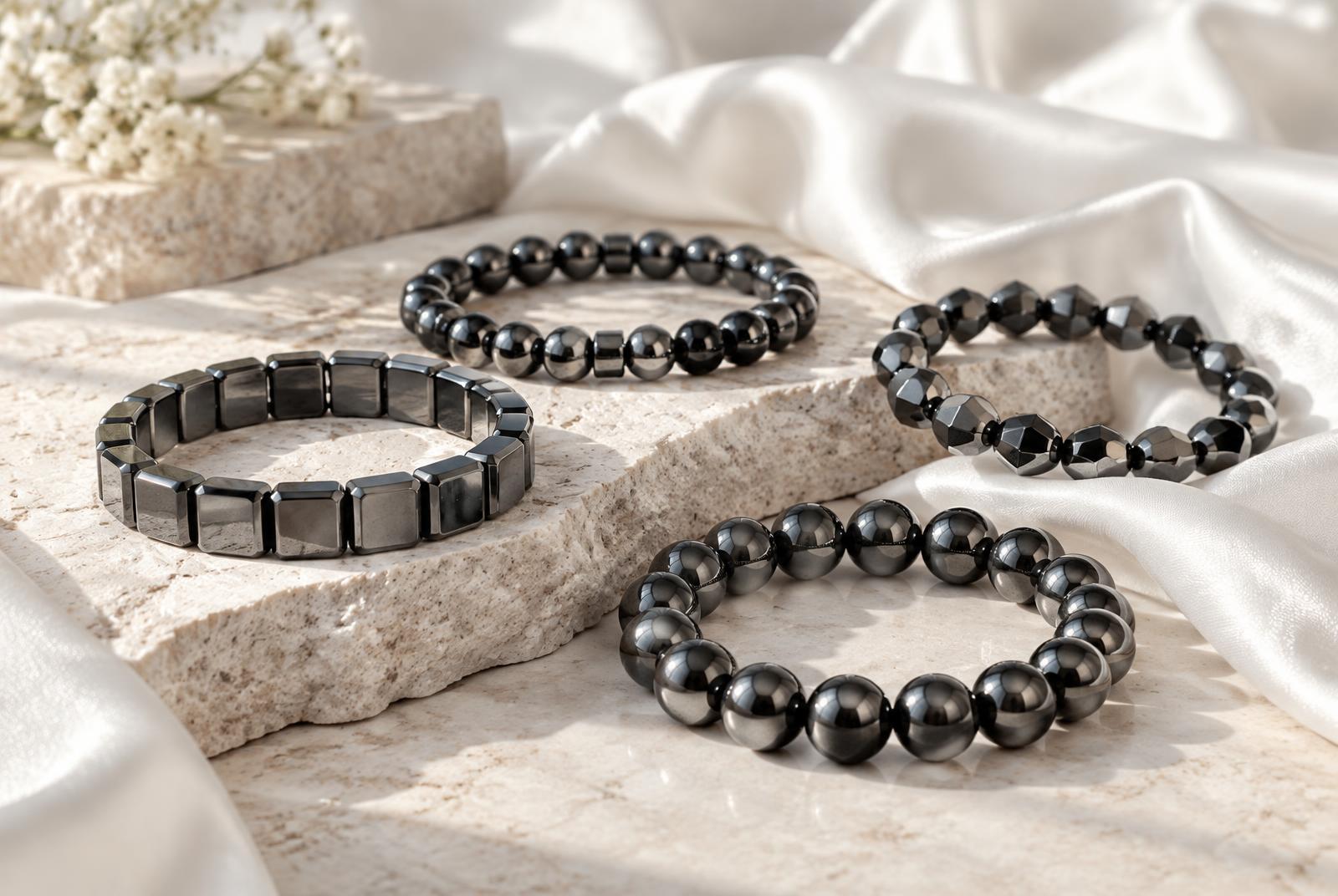
- Beads. About 20 to 24 round 8 mm beads for an average wrist. Mix in a few accent stones (tiger eye, lapis, turquoise) if you like color.
- Elastic cord. Clear stretch cord, 0.7 to 1 mm thick. Hematite is heavy, so thicker cord lasts longer.
- Scissors, a bead stopper or binder clip, and a small dab of jewelry glue (optional).
- A bead mat or folded towel, so the round beads can't roll away.
Measure your wrist
Wrap a soft tape measure snugly around your wrist just above the wrist bone. Add about 1.5 cm (half an inch) for a comfortable fit, or a little more if you like a looser drape. Most finished bracelets fall between 17 and 19 cm.
An easy check: lay the beads in a line along a ruler until they reach that length. That number is your bead count.
Pre-stretch the cord
Cut about 25 cm of cord and pull it firmly a few times before you string anything. New elastic stretches out on its first few wears; doing it up front means the bracelet keeps its size afterward instead of loosening.
Stringing magnetized beads
Put the bead stopper or clip on one end, then thread the beads one at a time. Magnetized hematite beads will try to grab each other, flip around, and snap into clumps. That's normal. Keep the unused beads spread apart on the mat, and add each new bead with its natural "pull" direction: if a bead pushes away, turn it over and it will seat neatly.
Before tying, lay the strand flat and check the pattern. Accent stones look best spaced evenly, or as a single focal bead.
Tying a knot that holds
Use a surgeon's knot. Cross the ends as for a regular knot, but pass the end through twice instead of once, then pull tight. Add a second single knot on top. Pull the cord firmly as you tighten so there's no slack between beads.
A tiny drop of jewelry glue on the knot helps. Let it dry, trim the ends to a few millimetres, and gently roll the knot inside the hole of the neighboring bead so it's hidden. The result is a clean, continuous circle with nothing to fasten. It simply slides over the hand.
Common mistakes
- Cord too thin for the weight of hematite, which snaps within weeks.
- Skipping the pre-stretch, so the bracelet loosens in a few days.
- Trimming the ends right against the knot before the glue sets.
- Rolling the bracelet on over the hand instead of stretching it evenly.
Keeping it looking new
Hand-made or bought, the same habits apply. See our cleaning and care guide and, for tired beads, how to polish hematite.
A note on safety: magnetized beads are strong small magnets. Keep loose beads away from young children and pets, who may swallow them, and away from pacemakers and similar devices, as with any magnet.
MagBrace makes no health or medical claims of any kind. These bracelets are jewelry — worn for how they look and feel, nothing more.
Adding copper accents to a handmade strand
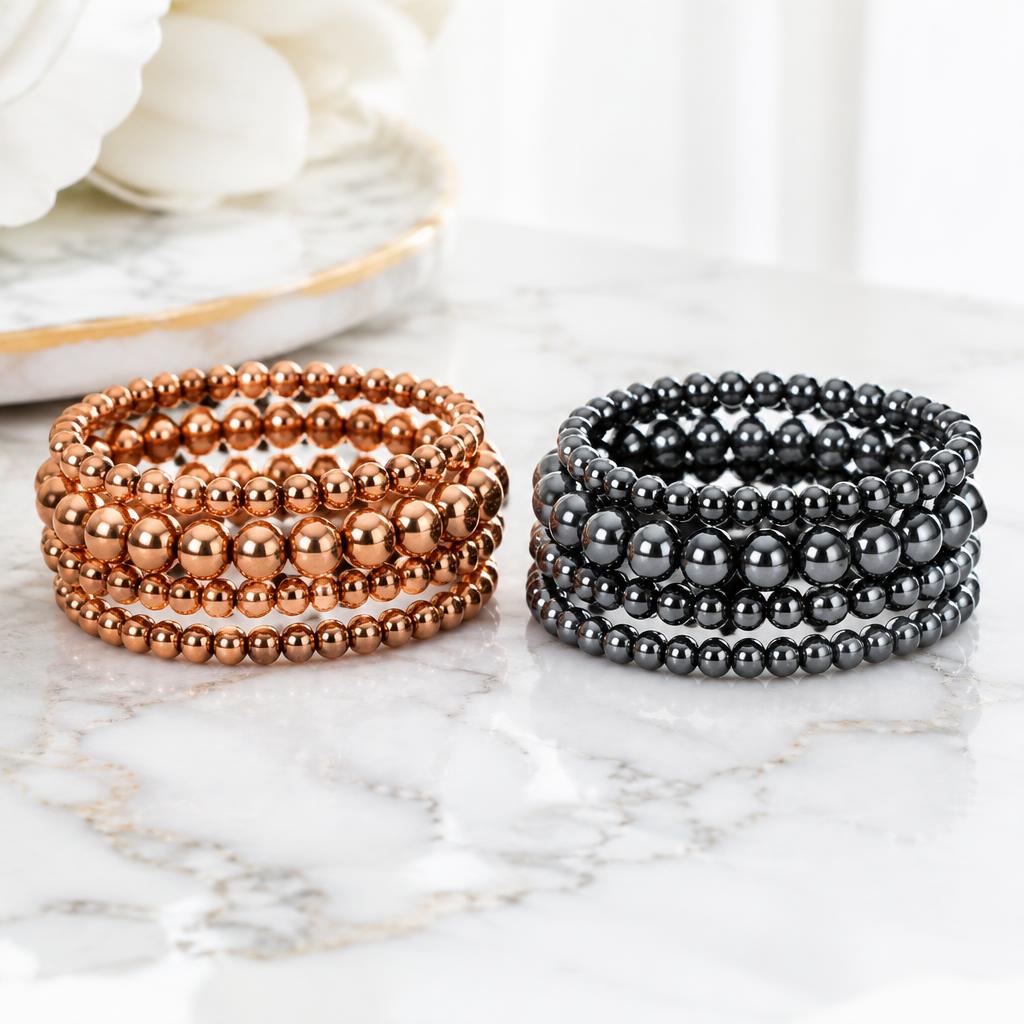
Copper spacer beads are one of the easiest ways to personalize a homemade hematite bracelet. A few warm metal rings placed between dark beads break up the gunmetal rhythm and catch the light differently from polished stone. Spacers come in smooth, faceted and hammered finishes, and most are sized to fit the same elastic cord used for 6 mm or 8 mm beads. Check that the hole edges are smooth, because a sharp metal edge can wear through elastic faster than stone does.
Balance matters more than quantity. One spacer every four or five beads gives a subtle accent; a spacer between every bead creates a stronger striped pattern. Lay the design out on a bead board or folded towel before stringing so you can see the full circle. Remember that copper naturally darkens over time, so a new bright spacer will gradually soften toward brown. Many makers enjoy that change because the bracelet starts to look lived-in.
Finishing touches that last
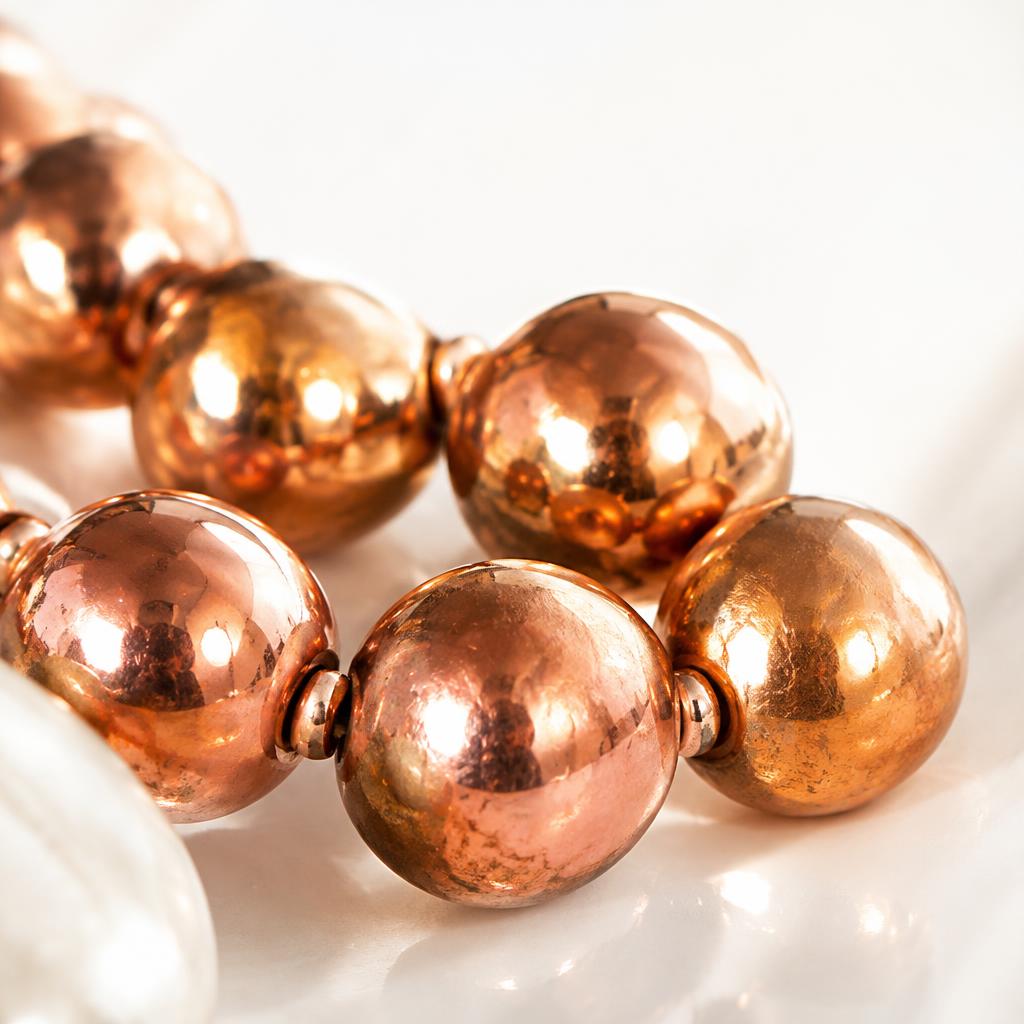
The knot is the heart of a stretch bracelet. Pre-stretch the cord before you begin, tie a surgeon's knot with firm even tension, and add a tiny drop of jewelry glue designed for elastic. Let it dry fully before trimming the tails, then slide the knot inside a neighboring bead with a larger hole so it is hidden and protected.
Test the finished bracelet by rolling it gently over your hand rather than pulling it wide. Rolling spreads the stretch around the whole strand. Store it flat instead of hanging it, and keep magnetic beads away from cards and electronics in a small separate pouch. A well-made strand can stay neat for a long time with this simple routine.