Reading
Guides & articles
Everything worth knowing about magnetic hematite bracelets, written in plain language and kept free of health claims.
What is magnetic hematite?
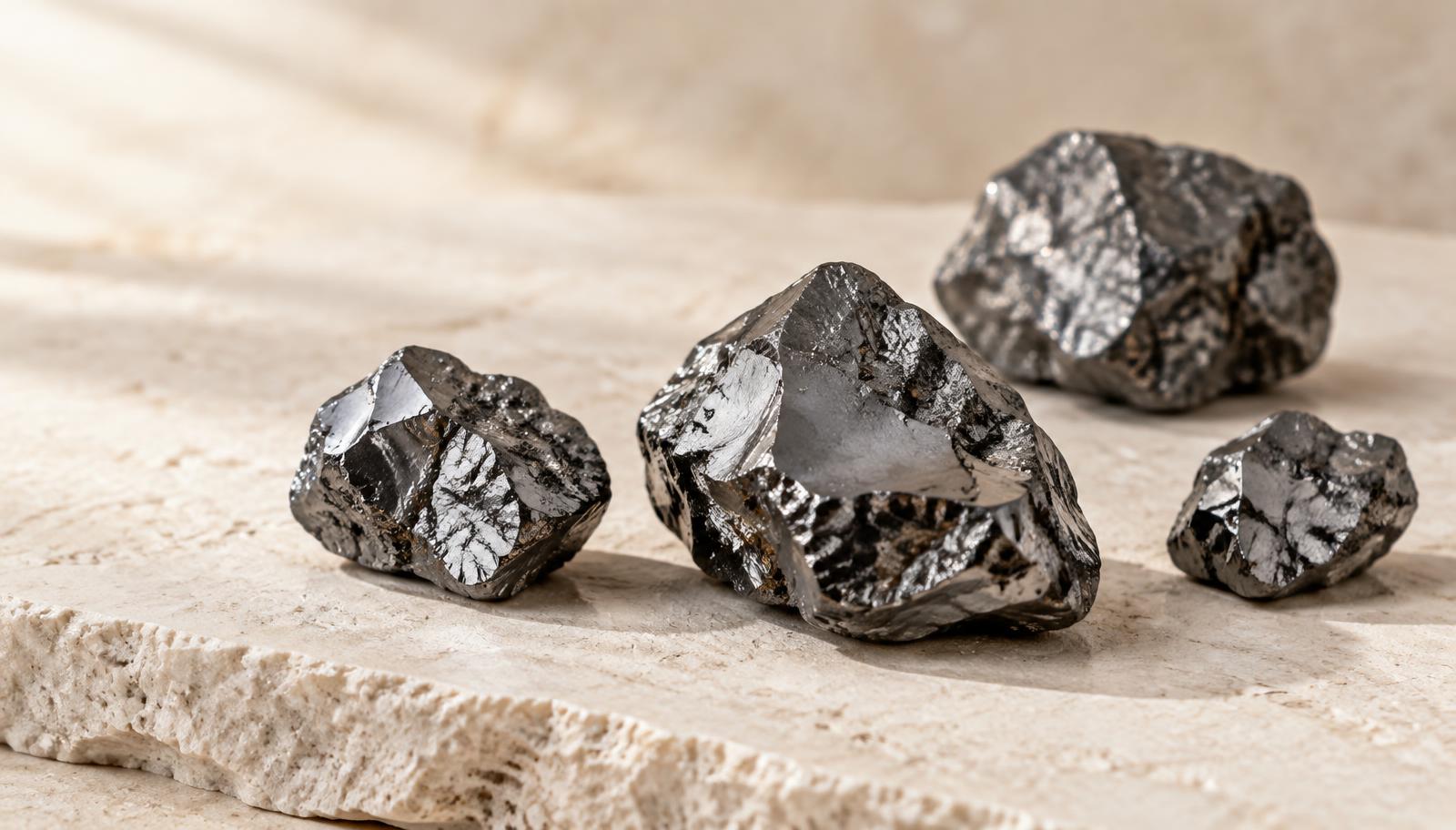
The stone itself — an iron mineral with a mirror-black polish, and why it turns up in jewelry.
Is hematite magnetic?
Why hematite responds to a magnet, and the difference between natural stone and magnetized beads.
What is a magnetic bracelet?
The kinds people wear, how the beads are magnetized, and what sellers mean by strength.
What makes magnetic bracelets different
The pull, the weight, the material — what actually sets a magnetic strand apart on the wrist.
How to tell real hematite from fakes
Glass, plastic, dyed howlite and reconstituted imitations — six checks that take seconds.
What to look for when buying
Polish, drill holes, cord quality, weight and the imitation test — how to judge a bracelet in ten seconds.
How to wear a hematite bracelet
Which wrist, how many strands, which colors work with what — a unisex styling guide.
Men's hematite bracelets
Why hematite became the go-to men's bracelet stone — the gunmetal look, the weight, the suit-sleeve test.
Cleaning and care
Keeping the shine, protecting the stretch cord, and storing magnetic beads sensibly.
How to polish hematite
Bringing back the mirror shine, handling rust spots, and polishing raw stone by hand or tumbler.
Make your own stretch bracelet
Beads, cord, sizing, stringing magnetized beads, and a knot that holds.
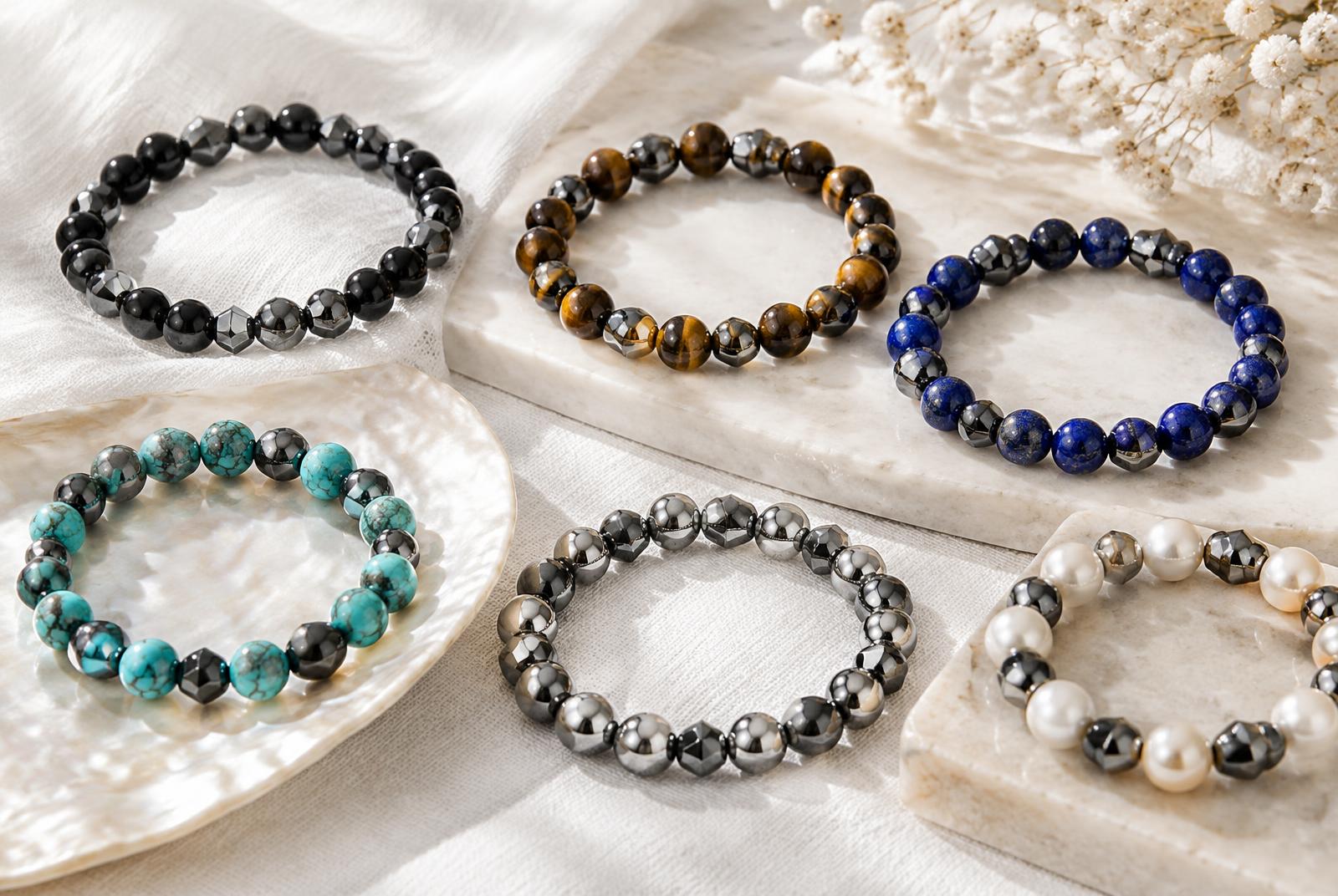
The nine colors, one by one
Turquoise to amethyst — what each accent stone is and how it reads against black.
Twelve facts about hematite
Rust, cave paintings, ancient mirrors and modern beads — plain geology and history, no myths.
Hematite vs other black stones
Onyx, obsidian and black tourmaline compared — four black stones, four different materials.
Why people wear stones
Amulets, Roman seals, Victorian sentiment and birthstones — the long story of stone jewelry.
Benefits and meanings
What people mean when they talk about hematite's meaning, framed as tradition rather than effect.
A history timeline
From ground red ochre to machine-cut beads and stretch cord — seventy thousand years of a dark stone.
How to read these guides
If you are new to magnetic hematite bracelets, start with the Stone page and the guide to whether hematite is magnetic. Those two explain the most common point of confusion: natural hematite is an iron-rich mineral that is barely magnetic, while the shiny beads sold as magnetic hematite are usually manufactured from iron oxide and then magnetized. Once that difference is clear, every other article becomes easier to follow, from spotting fakes to comparing black stones.
Next, move to the practical guides. The buying guide covers bead size, weight and finish; how to wear covers sizing, stacking and pairing with a watch; and the care and polishing guides explain how to keep the gunmetal shine bright. Every bracelet discussed on this site is stretchable, has no clasp and rolls on easily over most wrists, so the sizing advice focuses on comfort and drape rather than fiddly fastenings.
Where copper fits in
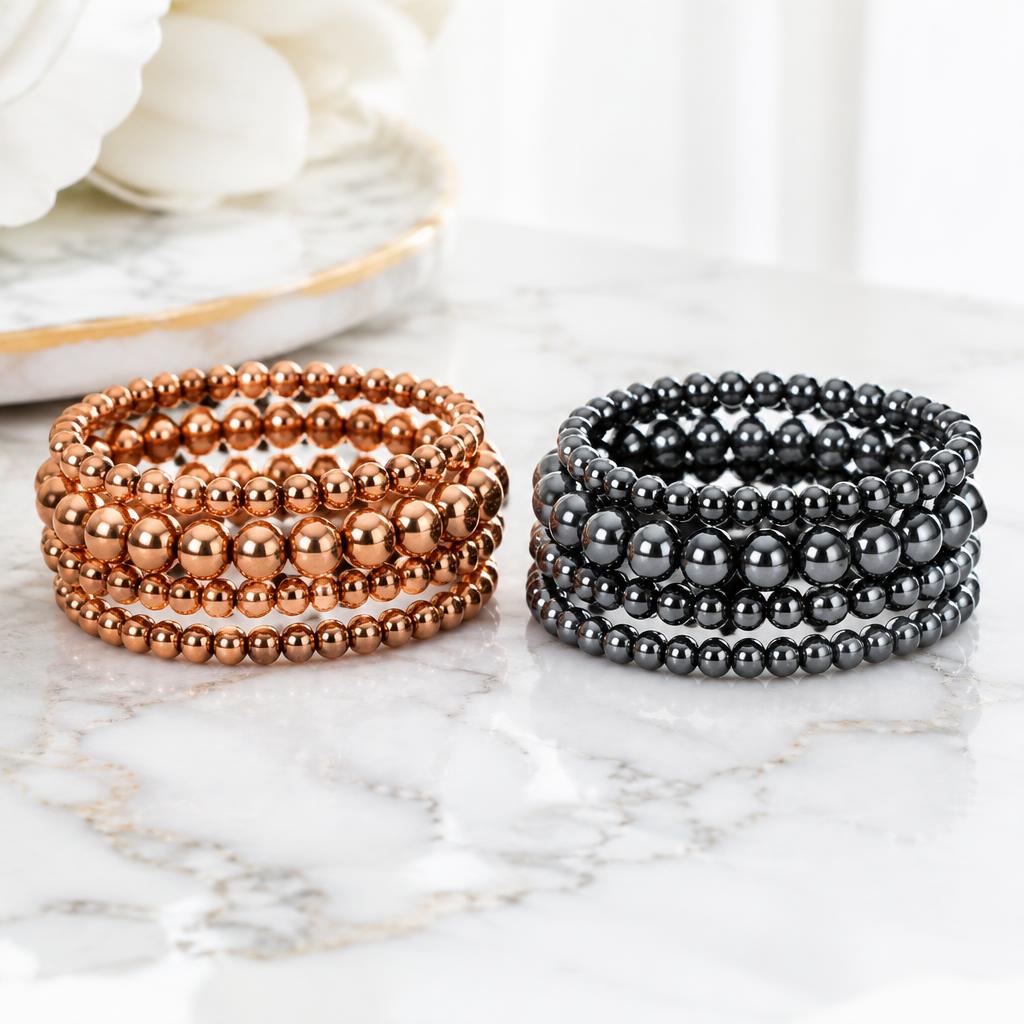
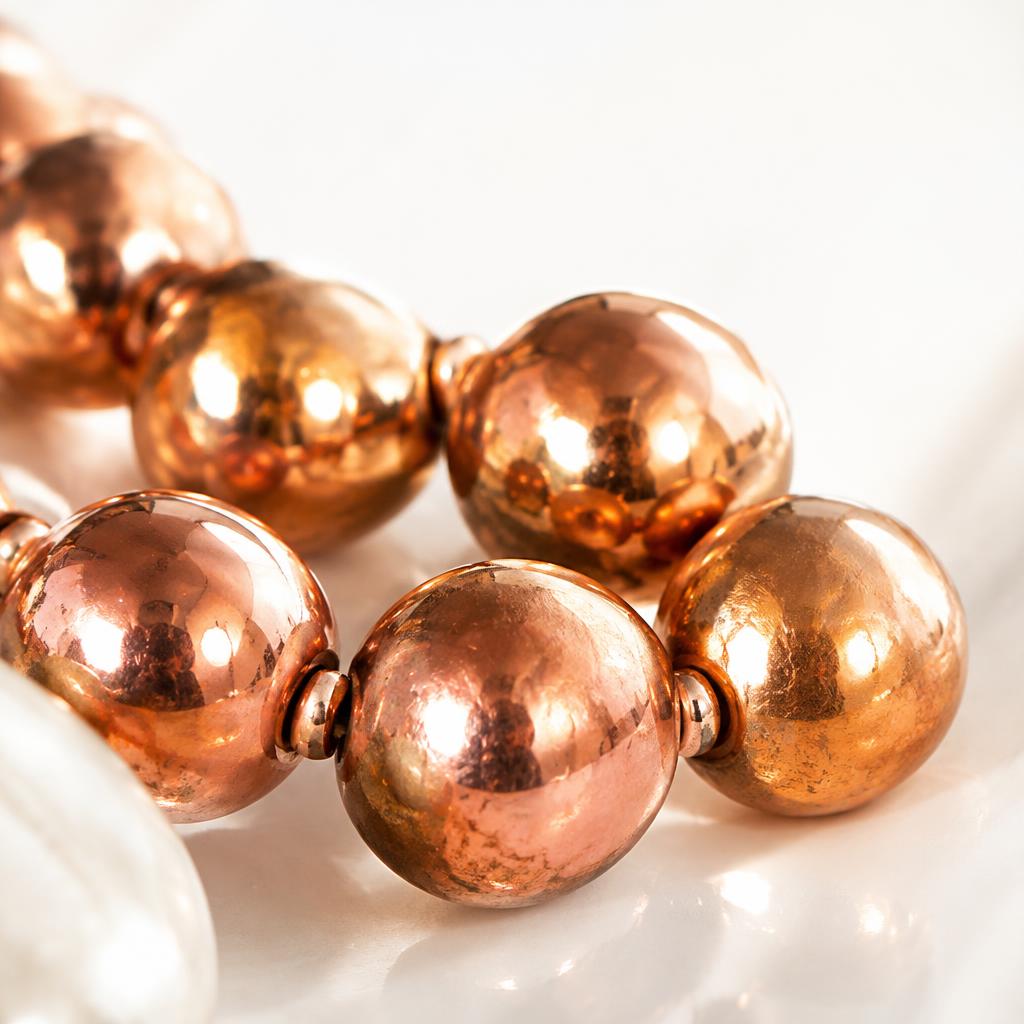
Magnetic copper bracelets appear throughout these guides because they are the most common companion to hematite. Copper is warm, reddish and soft enough to hammer or brush, but it is not magnetic on its own. Designers add small magnets into cuffs or links, which is why a paperclip test finds attraction only at certain points. Solid copper also develops a natural patina over time, turning from bright penny tones to a deeper brown.
Pairing the two materials is mostly about contrast. Cool charcoal beads sit beside warm metal the way a black belt sits beside brown leather shoes: it works when it looks deliberate. The colors guide, the men's guide and the history timeline all show different ways to combine them, from a single quiet band to a layered stack. As always, MagBrace writes about these pieces purely as jewelry.
MagBrace makes no health or medical claims of any kind. These bracelets are jewelry — worn for how they look and feel, nothing more.