Explainer
What makes magnetic bracelets different
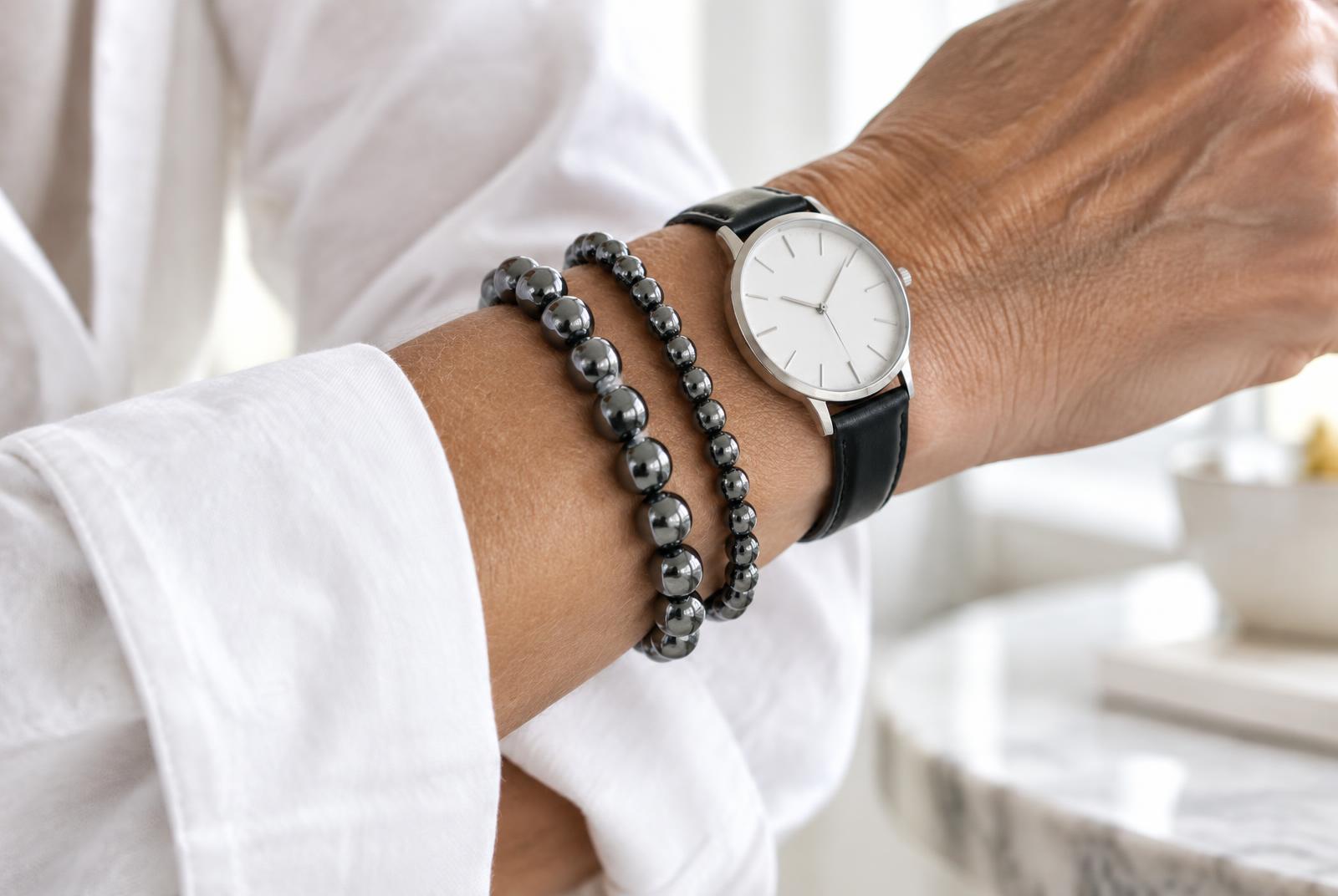
From the outside, a magnetic hematite bracelet looks like any well-made black beaded strand. On the wrist, it doesn't feel like one. Here is what is actually going on underneath.
The pull you can feel
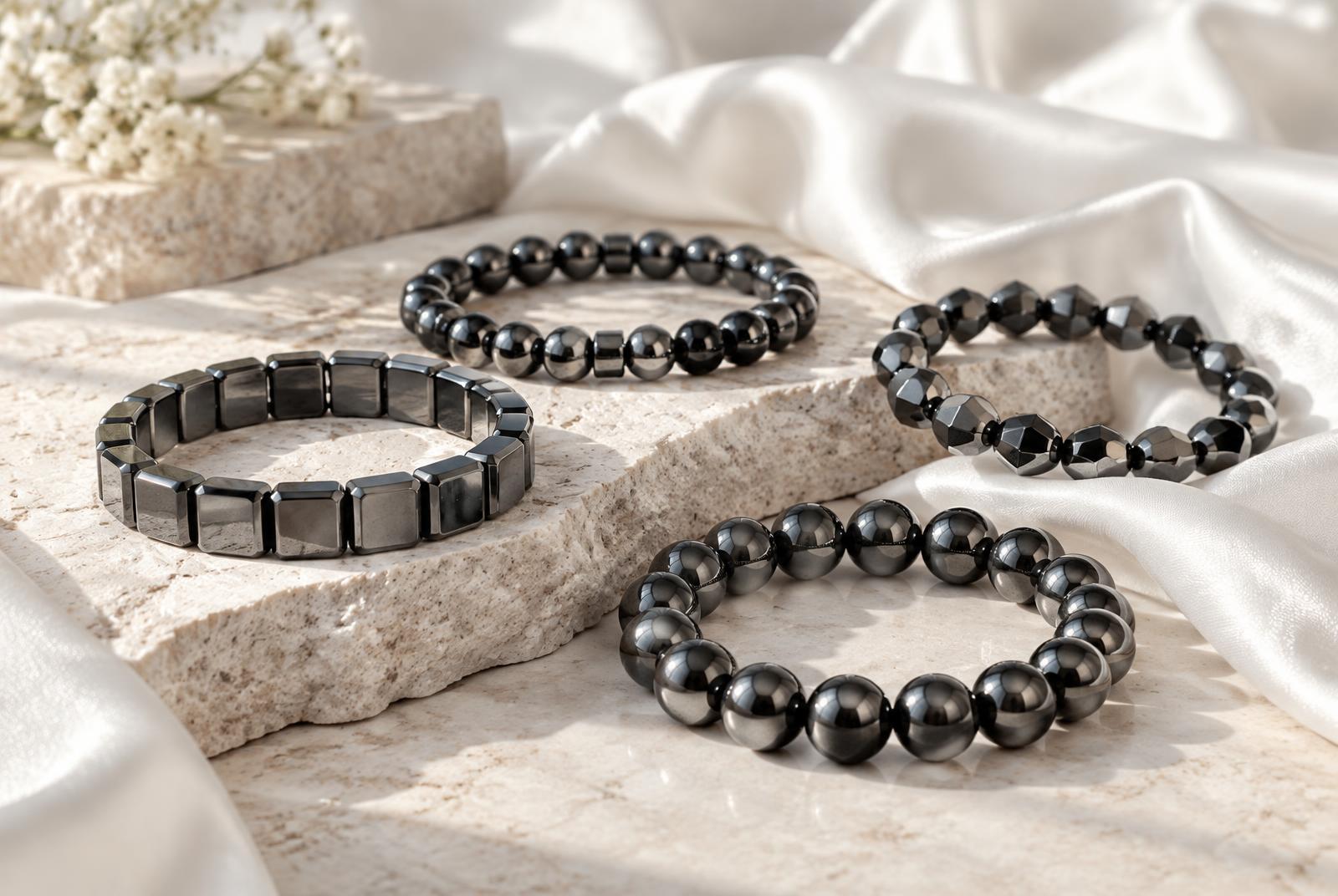
In an ordinary beaded bracelet, the beads touch because the cord holds them there. In a magnetic one, the beads are also attracting each other — gently but constantly. Run your fingers along the strand and you feel a faint resistance, like sliding a zipper. Hold two bracelets near each other and they reach for one another. It is a small thing, but it is the difference people notice first and mention most.
The material itself
The magnetism comes from the beads, not from hardware added to them. In our bracelets the beads are genuine hematite — an iron mineral, twice as dense as glass — that was magnetized during manufacturing so it holds a lasting charge. That iron origin is also why hematite takes on a metallic, mirror-like polish that glass and plastic beads cannot copy.
How it sits on the wrist
Weight changes how a bracelet wears. Hematite strands sit heavier and hang straighter than glass or plastic of the same design, and the beads settle against each other rather than scattering. The strand reads as more deliberate — closer to a piece of machined metal than a handful of beads.
The habits that come with it
Because the beads hold a magnetic charge, a magnetic bracelet asks for two small habits. Store it away from credit cards with magnetic stripes, mechanical watches and fine chains it might collect overnight. And keep it out of prolonged soaks, as with any stone jewelry. Neither habit is complicated; both are worth knowing.
What the magnetism is not
It is worth saying plainly: the magnetism is a property of the jewelry, not a treatment. We make no health or medical claims of any kind about these bracelets, and we would rather lose a sale than imply one. People wear them because they look sharp, feel substantial and last — and because that quiet magnetic pull makes them unlike any other strand on the shelf.
MagBrace makes no health or medical claims of any kind. These bracelets are jewelry — worn for how they look and feel, nothing more.
Copper cuffs versus beaded strands
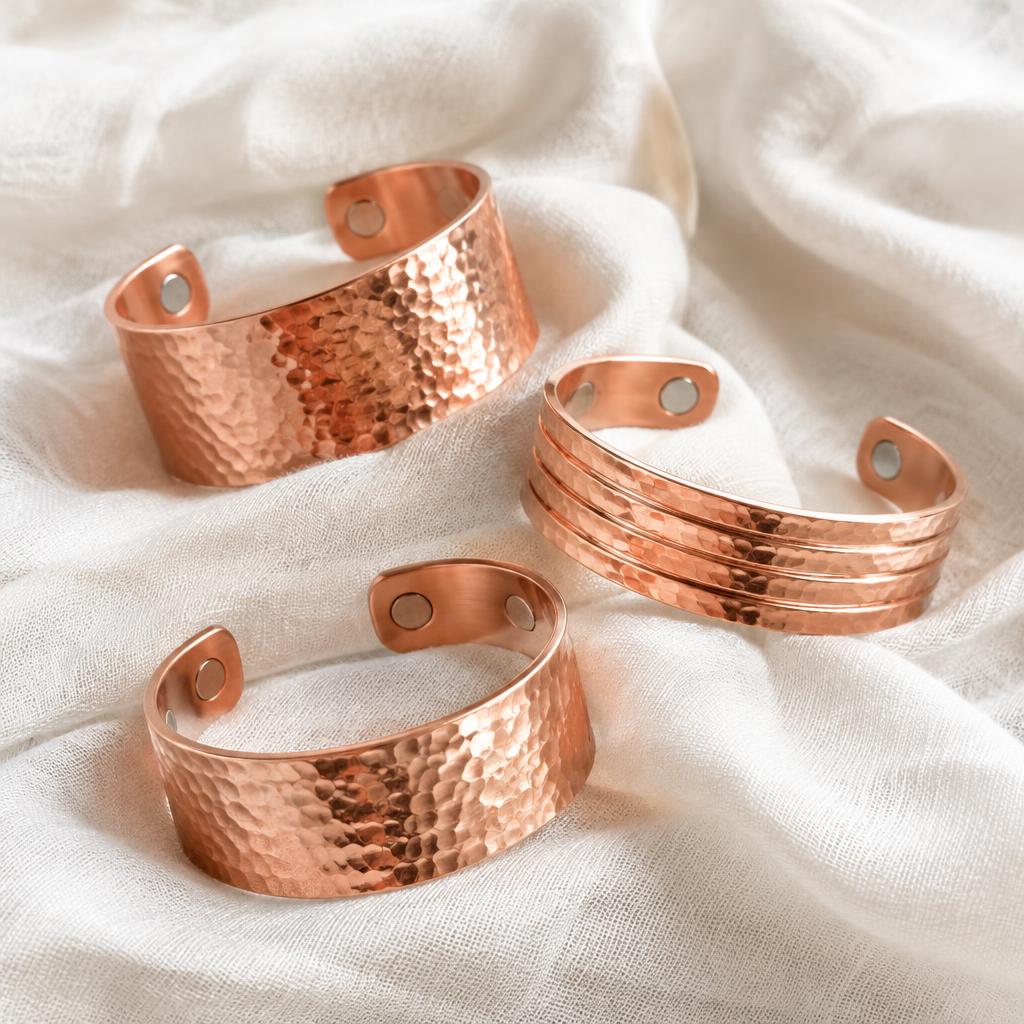
A magnetic copper cuff is usually a solid or hammered band of copper with small magnets set into the inner ends. It opens slightly so it can be pressed on from the side, and it keeps one fixed shape. A magnetic bead bracelet, by contrast, is a flexible circle of magnetic beads on elastic cord that rolls over the hand and moves with the wrist.
Those differences change the experience of wearing them. The cuff has a bold, sculptural look and shows off copper's color and texture. The strand is lighter on the eye, easier to stack and fits most wrists without adjusting. Some people wear both together for contrast between warm metal and cool gunmetal stone.
What to look for in construction
In a cuff, look at how the magnets are attached. They should sit flush or slightly recessed, with no visible glue spills and no rough edges that could catch on sleeves. The copper should feel smooth along the inside where it touches skin, and the opening should be wide enough to slide on comfortably.
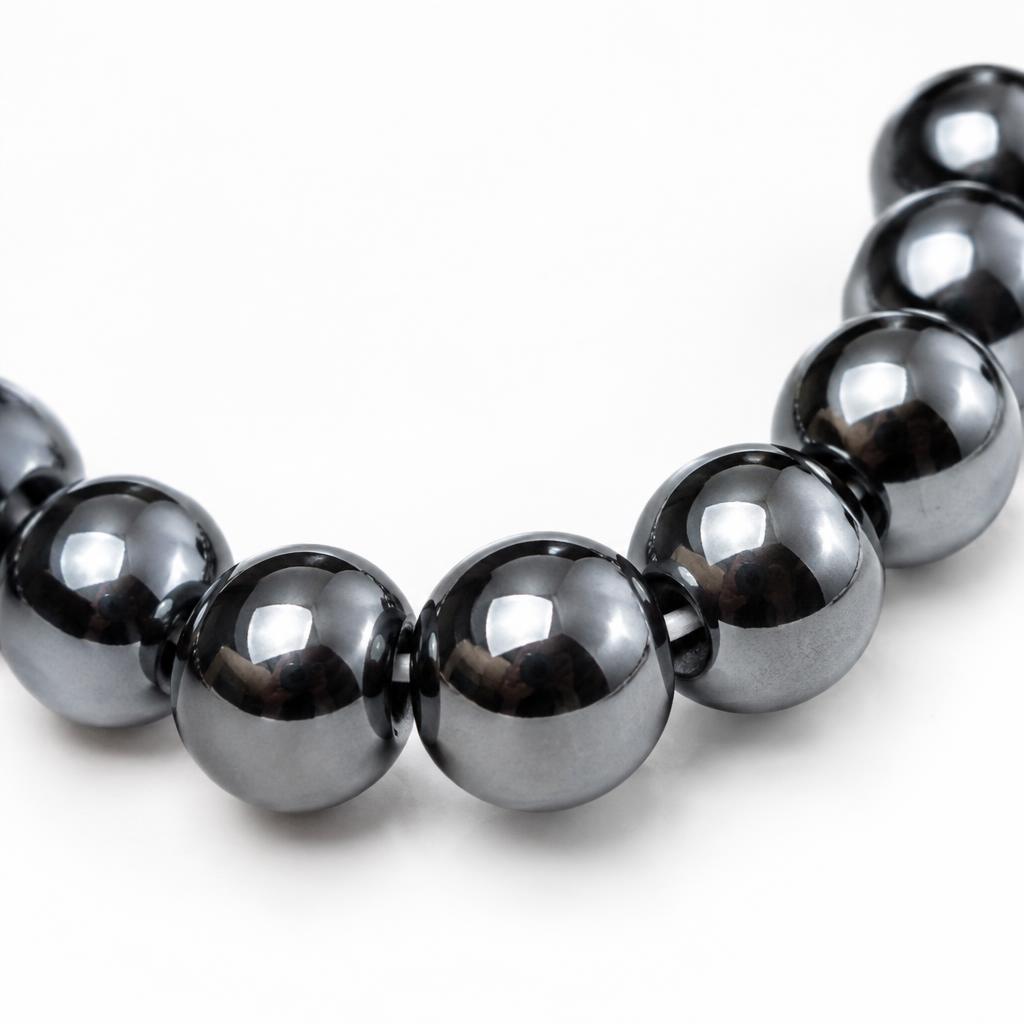
In a bead strand, look for evenly sized beads, a hidden knot and a cord that returns to shape after stretching. Clear product descriptions that name the materials, such as solid copper versus copper-plated, are a good sign. Honest sellers describe these bracelets as jewelry and avoid promises about health.