Guide
How to polish hematite
Polished hematite has a near-metallic shine. It's one of the most mirror-like stones there is. When it dulls, the fix is usually gentle. When you're starting from a rough nugget, it takes patience.
First: is it dull, or just dirty?
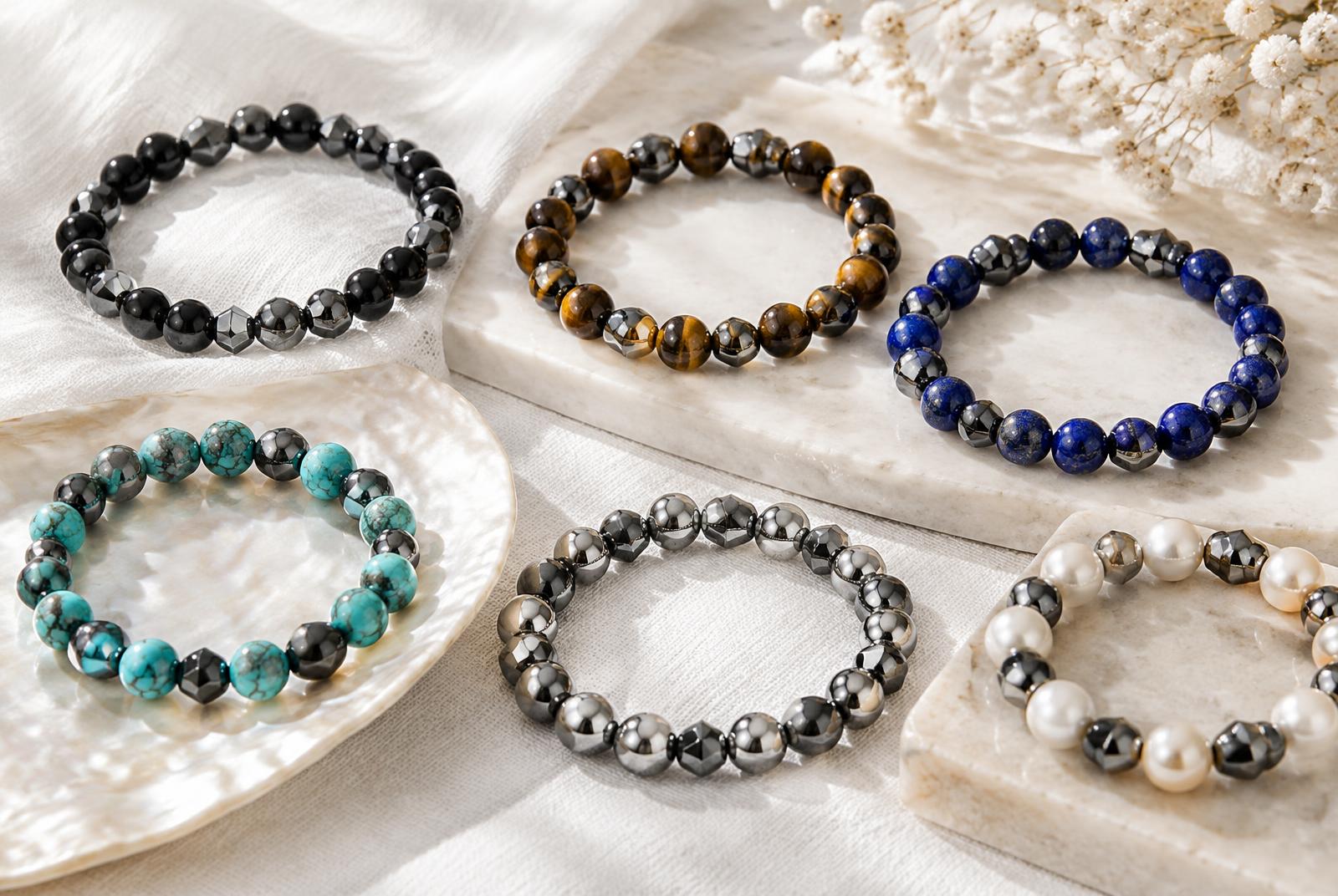
Nine times out of ten, a "dull" hematite bracelet is coated in skin oil, lotion or dust. Wipe one bead hard with a dry microfibre cloth. If it comes up bright, the stone is fine. Clean the rest the same way and stop there. Our care guide covers everyday cleaning.
Buffing bracelet beads by hand
For beads that still look hazy after cleaning, use a jewelry polishing cloth, the kind sold for silver, or a soft cotton cloth with a pea-sized dab of plain metal or stone polishing paste. Rub each bead in small circles, then buff with a clean dry cloth.
Keep the cord as dry as you can and avoid getting paste into the drill holes. Never put a finished bracelet in a tumbler or ultrasonic cleaner: the cord can't take it, and magnetized beads will clack together hard enough to chip.
Dealing with rust spots
Hematite is iron oxide, so long contact with water can leave orange or reddish freckles, usually near the holes. Dry the bracelet completely, then rub the spot with a dry cloth. Stubborn marks can be worked gently with a soft pencil eraser, then buffed. Avoid acids, vinegar and rust removers; they etch the polished surface.
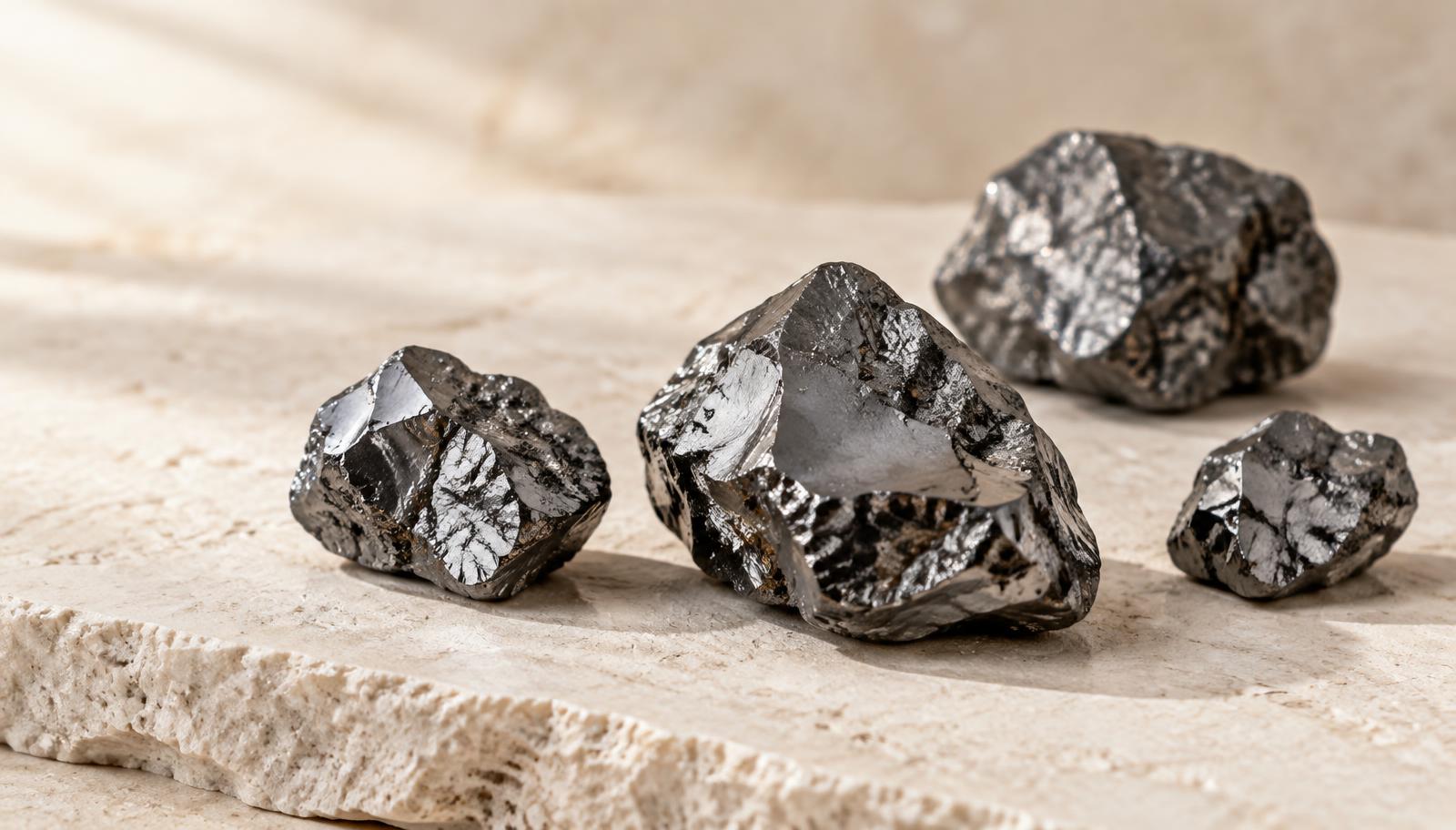
Polishing raw hematite by hand
Raw hematite is fairly hard. It rates about 5.5 to 6.5 on the Mohs scale, a little softer than quartz. You can take a rough nugget to a shine with wet sandpaper:
- Start with 220-grit wet/dry paper to smooth rough edges, keeping it wet.
- Move through 400, 600 and 1000 grit, rinsing the stone between each grade.
- Finish at 2000 to 3000 grit, then buff on leather or felt with a polishing compound such as cerium oxide.
The water will turn reddish-brown. That's hematite's famous red streak, the same pigment people used as red ochre for tens of thousands of years. It washes out of most surfaces, but work over a tray and wear old clothes.
Using a rock tumbler
For a batch of raw pieces, a rotary tumbler does the work over several weeks: coarse grit, medium, fine, then a polish stage. Hematite is heavy, so fill the barrel only about two-thirds and add filler such as ceramic media to cushion it. Clean the barrel thoroughly between stages, as a single leftover coarse grain will scratch the final polish.
When polishing won't help
Many inexpensive "hematite" beads are hematine, a man-made material, or have a painted or plated finish. If the shine is peeling rather than dulling, polishing will only remove more of it. Our guide to telling real hematite from fakes explains the difference.
MagBrace makes no health or medical claims of any kind. These bracelets are jewelry — worn for how they look and feel, nothing more.
Polishing mixed copper and hematite pieces
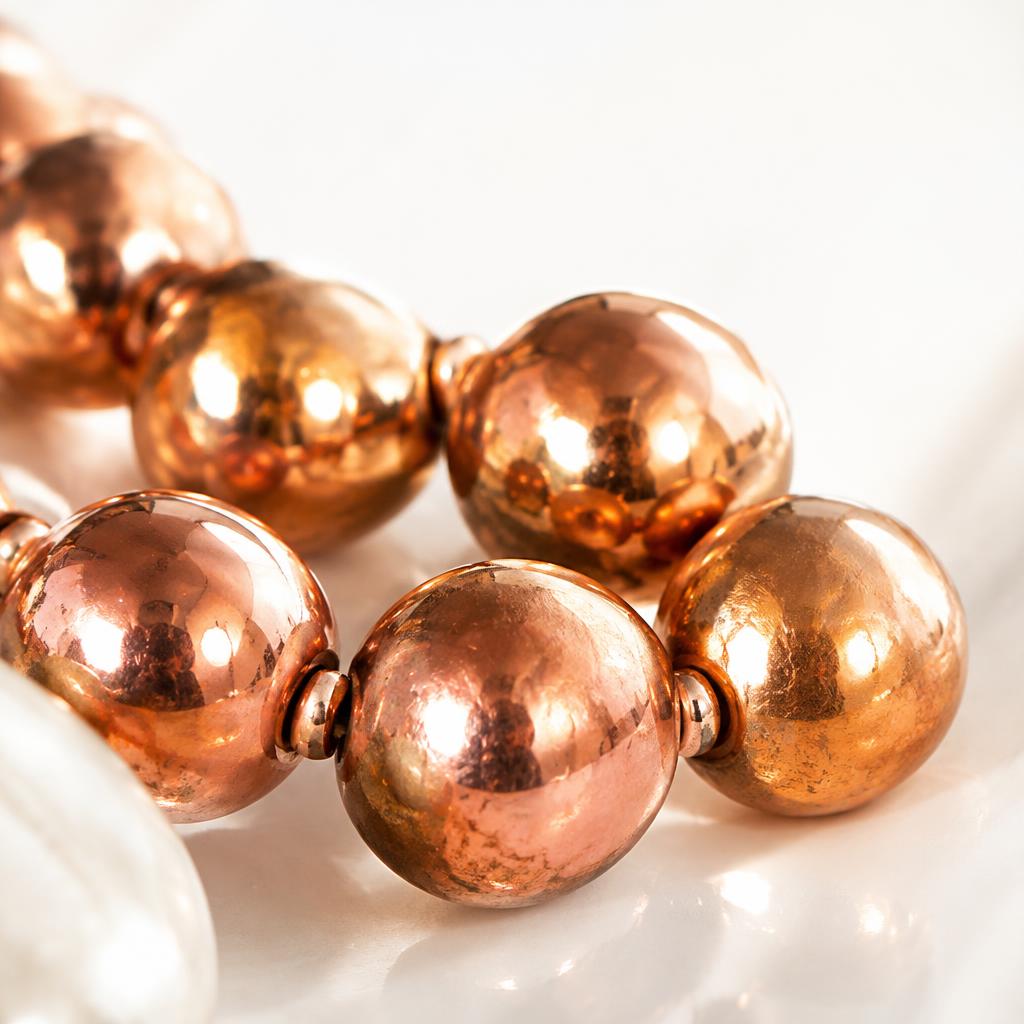
Treat copper and hematite as separate surfaces even when they share one bracelet. Start with a clean, dry microfiber cloth over the entire piece. If the copper needs more attention, use a dedicated non-abrasive jewelry cloth only on the metal and keep residue away from bead holes, cord and magnet recesses. Copper is softer than hematite, so it responds quickly; heavy pressure is rarely necessary.
Do not immerse a stretch bracelet in liquid polish or place magnetized beads in an ultrasonic cleaner. Fluid can reach hidden joins, while vibration lets dense beads strike each other. If a copper component is plated rather than solid, aggressive polishing may remove the thin surface layer. Test a discreet area first and stop when the cloth reveals an even luster. Controlled hand polishing protects both the warm metal and the dark mirror finish beside it.