Guide
How to tell real hematite from fakes
Hematite is one of the most imitated stones in jewelry, mostly because the fakes are cheap and the real thing is heavy. The good news: real hematite is easy to identify once you know what to check — and most checks take seconds.
Know the impostors first
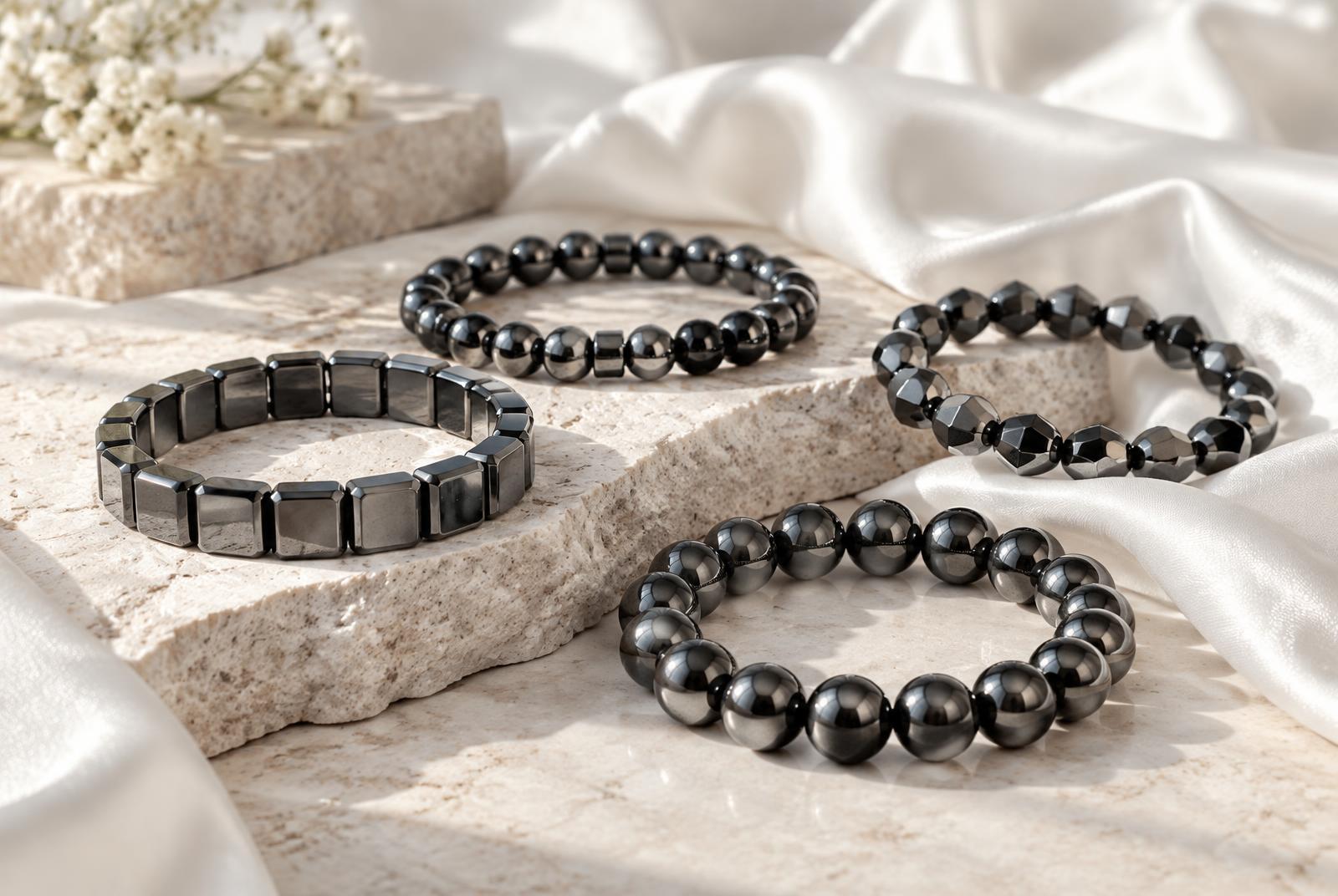
Four materials account for nearly all fake hematite. Glass beads are molded, glossy and convincingly dark. Plastic and resin beads are even lighter and often perfectly uniform. Dyed howlite or magnesite — porous white minerals soaked in black dye — can pass at a glance until you look at a drill hole. And reconstituted hematite is genuine hematite dust bound with resin, so it has the right weight but not the right structure.
One genuine material confuses people in the opposite direction: some dark beads sold as hematite are actually a synthetic magnetic material sometimes called hematine. It is not a natural stone, though it is honestly magnetic. If magnetism matters to you, ask whether the beads are natural stone or synthetic.
Check 1: the weight
Hematite is roughly twice as dense as glass and several times denser than plastic. A single real bead feels like a small piece of metal; a whole strand feels substantial in a way no imitation matches. This is the fastest and most reliable test — pick the bracelet up and you will know.
Check 2: the temperature
Dense stone and metal conduct heat away from your skin, so real hematite feels cool for a second or two on first contact, then warms. Plastic feels neutral immediately, and glass is somewhere in between. Hold a bead to the inside of your wrist and compare it with a plastic button — the difference is obvious once you have felt it once.
Check 3: the shine
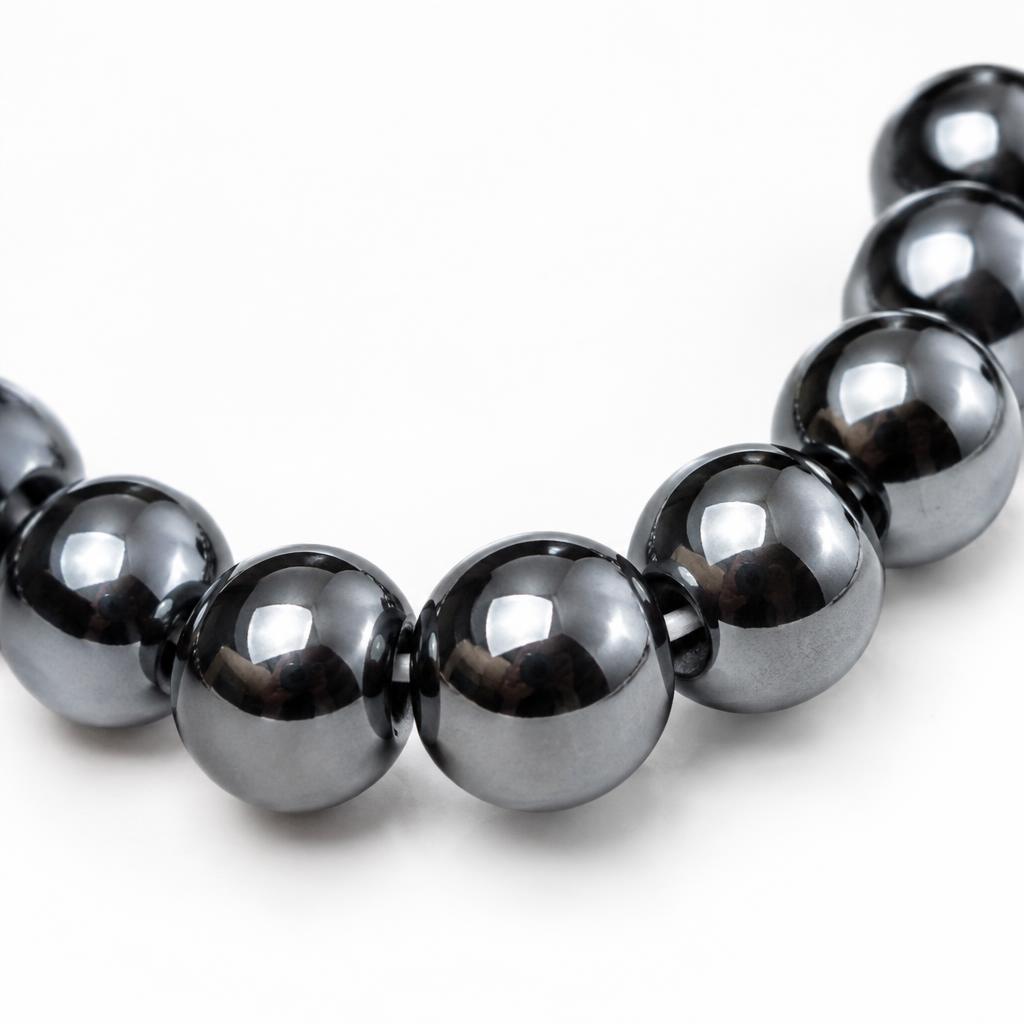
Real hematite polishes to a metallic, mirror-like luster with a slightly steely cast — it reflects light the way brushed metal does, not the way glass does. Glass and plastic shine glassy and sometimes show tiny round mold marks. Dyed howlite keeps a waxy, matte look even when polished, and under magnification the dye settles into its natural web of pores.
Check 4: the drill holes
The drill hole is where imitations give themselves away. On dyed stones, look for white or grey material showing inside the hole where the dye did not reach. On plastic, the hole edge is often slightly melted or rounded. On genuine hematite, the hole is the same gunmetal color as the surface all the way through.
Check 5: the streak — done safely
Mineralogists identify hematite by rubbing it on unglazed ceramic: it leaves a reddish-brown streak, which is where the stone's name comes from. On a finished bead you would only do this on an inconspicuous spot, because it leaves a faint mark. Plastic and glass leave nothing, and dyed howlite leaves grey. It is a last-resort test, but a definitive one.
Check 6: consistency — with a caveat
Perfectly identical beads from a mold suggest glass or plastic; natural stone shows tiny variations in tone and figure from bead to bead. But do not over-apply this one: good hematite is sorted and matched carefully, so a high-quality real strand also looks quite uniform. Weight and temperature are the tests to trust first.
If you are buying, just ask
A trustworthy seller states plainly whether the beads are natural hematite, whether they are magnetized, and whether anything is dyed or reconstituted. Vagueness on any of those three questions is the clearest warning sign of all — louder than anything you can detect by eye.
MagBrace makes no health or medical claims of any kind. These bracelets are jewelry — worn for how they look and feel, nothing more.
Checking copper alongside hematite
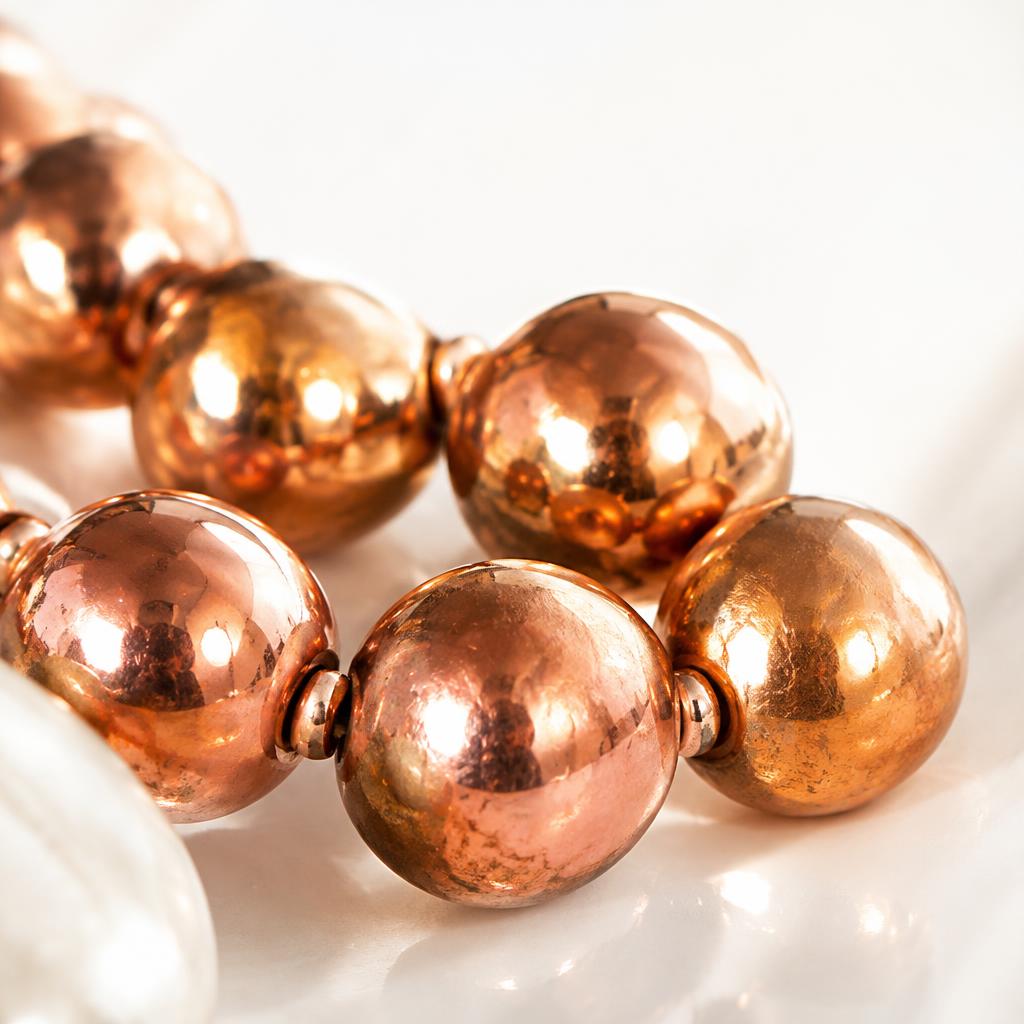
Many hematite bracelets now include copper details, so it helps to know how to judge both. Solid copper has a consistent color throughout; if a scratch on the inside reveals silver or gray metal underneath, the piece is plated. Real copper also darkens unevenly over weeks of wear, while plated pieces may stay bright and then suddenly show wear spots.
A simple magnet test is useful too. Pure copper is not attracted to a magnet, so a copper-colored band that sticks firmly along its whole length is likely steel with a copper finish. Combine this with the streak and weight tests for hematite to get a clearer picture of what a bracelet is made from.
When the label says magnetic hematite
“Magnetic hematite” is a common trade name, not a guarantee of natural stone. Most of these beads are manufactured magnetic materials polished to a gunmetal shine. That does not make them fake jewelry; it simply means they are a different product from natural hematite, and a good description should say so.
If authenticity matters to you, look for sellers who explain the composition plainly, show close photographs of the bead holes and surfaces, and describe weight and size. Natural hematite tends to vary slightly from bead to bead, while manufactured beads are almost perfectly uniform.