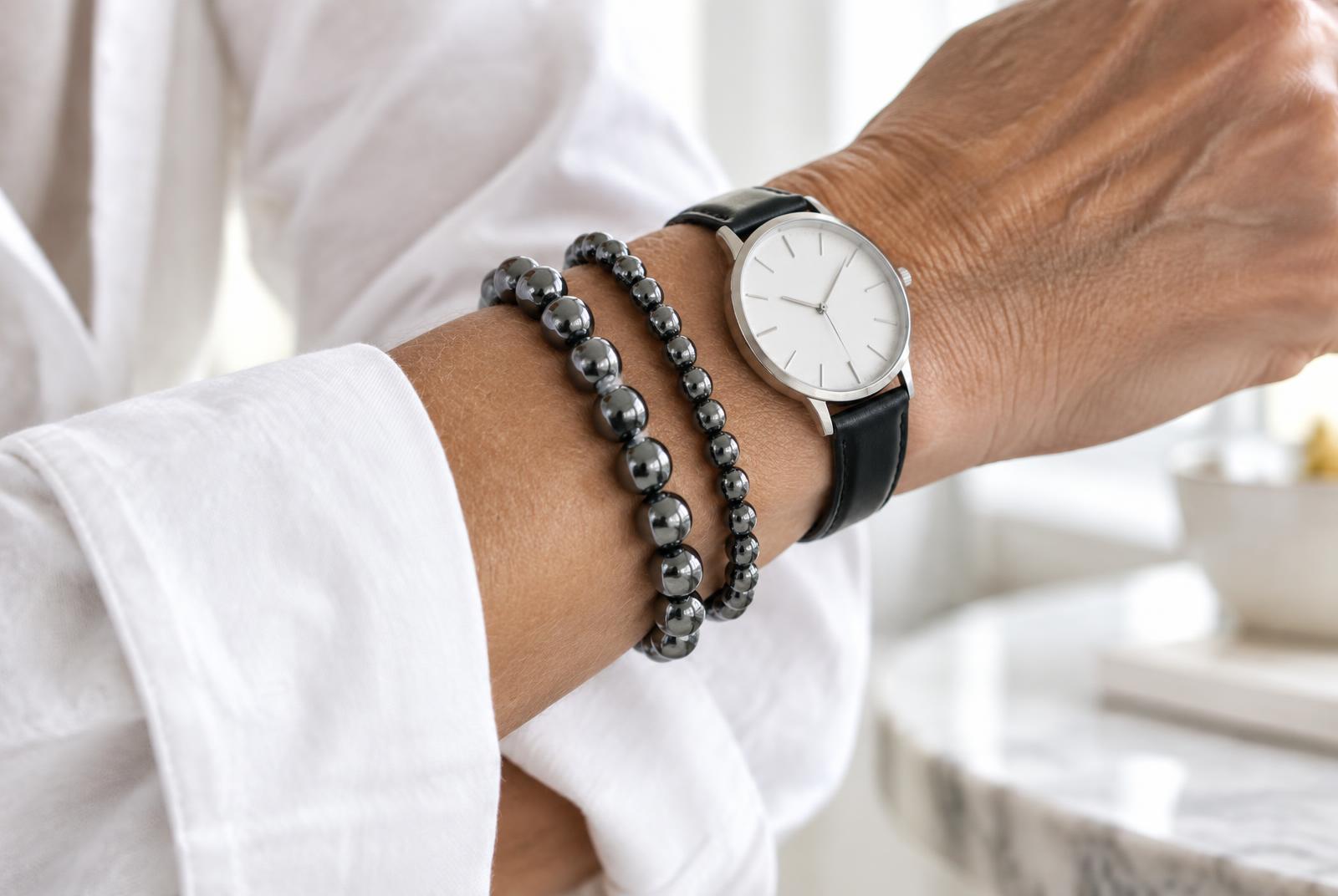
Explainer
What is a magnetic bracelet?
You have probably seen the words on market stalls, in gift shops and all over the internet. Here is what a magnetic bracelet actually is, what the beads are made of, and how to tell a well-made one from a poorly made one — with no promises attached.
The short answer
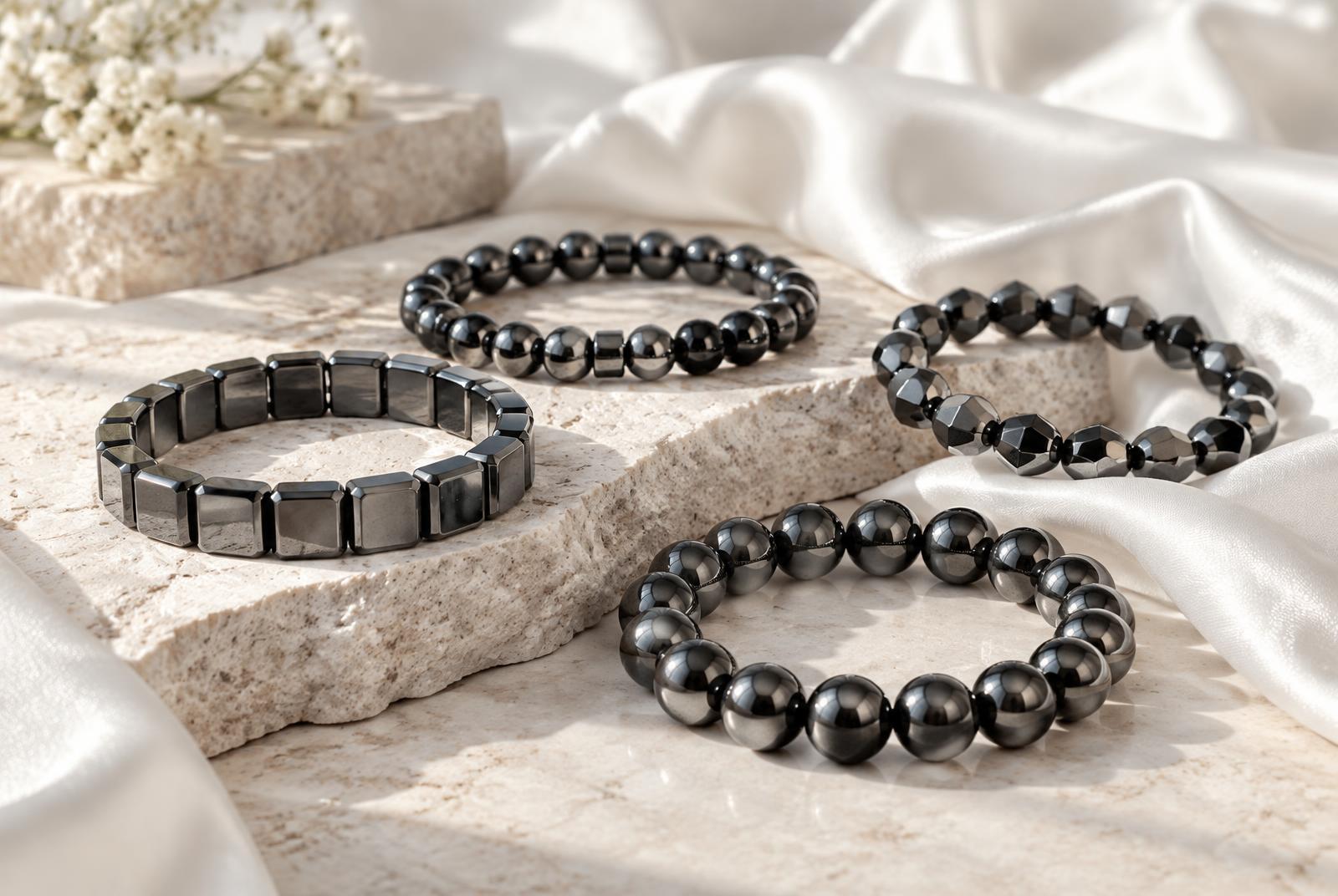
A magnetic bracelet is a piece of jewelry that contains one or more magnets. In most modern designs that means the beads themselves are magnetized: the whole strand is slightly magnetic, so the bracelet holds together in a satisfying way and clings gently to steel surfaces. There is no metal clasp and no separate magnet — the magnetism lives in the material of the beads.
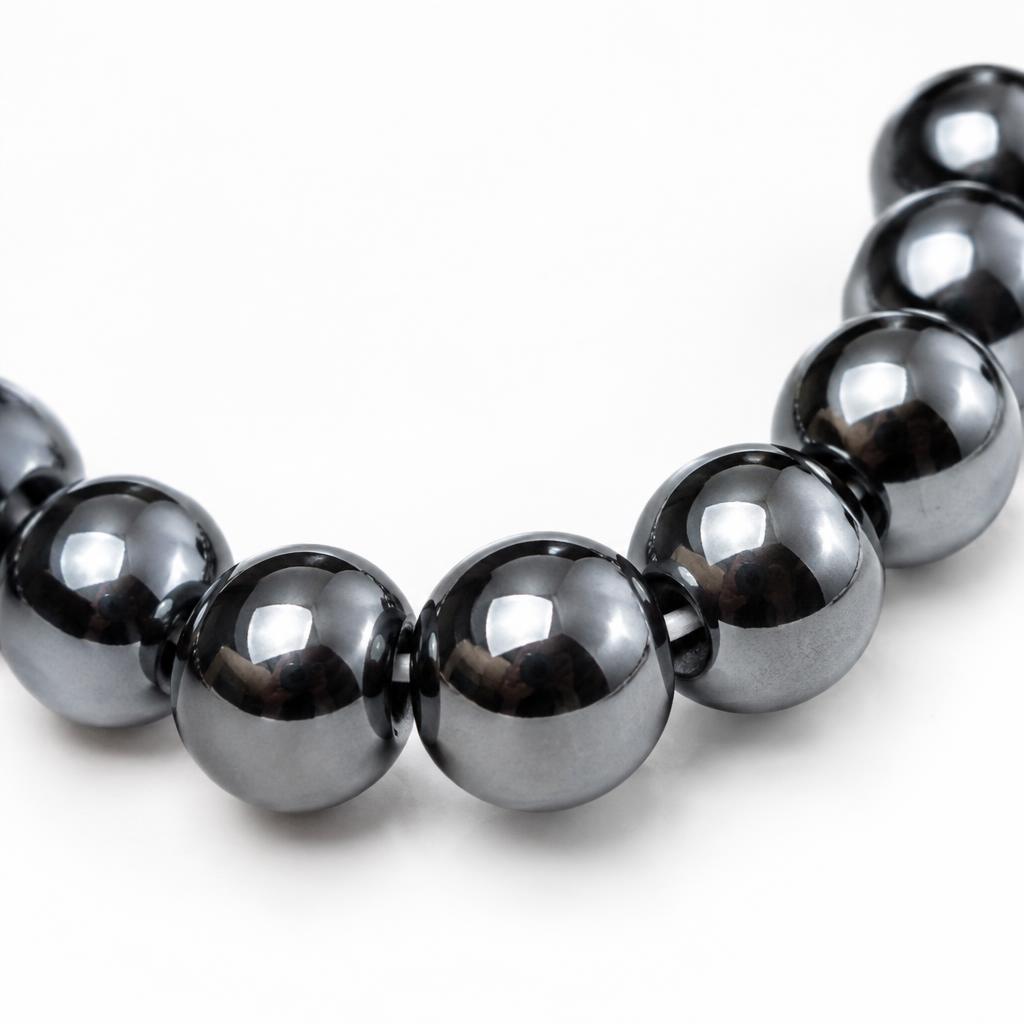
On this site we are specific about what that means. Hematite straight from the ground is only weakly attracted to a magnet. The beads in a magnetic hematite bracelet are real hematite that was magnetized during manufacturing, so they hold a lasting charge.
The main kinds you will see
Magnetized stone beads. Hematite is the classic — dense, mirror-polished and a true natural mineral. Other stones, such as some dark jaspers, are also sold magnetized. This is what our bracelets are: double rows of black hematite beads, often paired with an accent color.
Metal-link bracelets. The heavy silver or gold-tone styles often sold as copper or stainless-steel links, with small magnets set into the back of each panel. They read as a watch strap rather than a beaded strand.
Ceramic or composite beads. Molded ferrite material — the same family of magnets found in refrigerator magnets — finished to look like stone. Usually lighter and cheaper than real hematite, and to a trained eye it looks more like plastic than mineral.
What sellers mean by 'strength'
Magnet strength is measured in gauss, and listings love to quote big numbers. What the number describes is the magnet itself — not what it does for your body, a claim nobody can honestly make about jewelry. Two bracelets with very different quoted strengths can feel almost identical on the wrist.
For everyday wear, what actually matters is simpler: the beads should hold together and cling to a steel surface, the magnetism should not fade, and the bracelet should look good. That is the whole job.
Who wears them, and why we make them
Magnetic hematite bracelets are worn by an enormous range of people — men and women, young and old — mostly for one unglamorous reason: they look sharp. The dark, metallic shine of hematite reads as both classic and modern, it works with everything from a t-shirt to a suit, and the gentle magnetic pull between the beads gives the bracelet a feel that ordinary glass or plastic beads simply do not have.
We keep our position honest: these are fashion pieces. We make no health or medical claims of any kind about magnets or hematite, and we think a seller who builds their pitch on promises about your body is telling you something about how they value you.
A safety note
People with a pacemaker or another implanted medical device, and people who are pregnant, are commonly advised to avoid magnetic jewelry. That is a general precaution about magnets, not a statement about what the bracelet does.
MagBrace makes no health or medical claims of any kind. These bracelets are jewelry — worn for how they look and feel, nothing more.
Where magnetic copper designs fit
Magnetic bracelets are not all built the same way. Beaded styles use magnetic material throughout the strand, while copper cuffs and metal-link bracelets usually contain separate magnets installed on the inside. Copper provides the color and structure; it is not itself a permanent magnet. That makes “magnetic copper” a description of the assembled bracelet rather than the metal alone.
This construction creates different choices. A cuff has a clean continuous silhouette and can show hammered, brushed or polished texture. A stretch strand moves more freely and fits most wrists. Link bracelets resemble watch bands and may need sizing. None is inherently better. Compare how the piece is assembled, how the magnets are seated, whether the dimensions are clear and whether the seller describes the materials honestly. Design and workmanship are more useful guides than health claims or oversized strength numbers.